

When One Flew Over the Cuckoo’s Nest first appeared on Broadway in 1963, it introduced audiences to a new kind of psychological drama: intimate, unsettling, and unafraid to interrogate the systems that shape human behaviour. Dale Wasserman’s adaptation of Ken Kesey’s novel didn’t simply translate the book to the stage; it carved out a distinct theatrical identity that has continued to resonate across generations and around the world.
Now, more than sixty years later, Melbourne audiences are preparing to encounter this landmark work, a story that has travelled widely, earned major accolades, and remained one of the most influential plays of the modern era.
The play’s journey began with Kirk Douglas, who secured the stage and film rights before Kesey’s novel was even published. Douglas envisioned the Broadway production as the first step toward a feature film in which he would star. The show opened at the Cort Theatre in November 1963 and ran for just over two months, a modest run, but one that featured an extraordinary cast including himself as McMurphy, Gene Wilder as Billy Bibbit and Ed Ames as Chief Bromden.
Although the production didn’t become the cinematic launchpad Douglas hoped for, it set the foundation for a global theatrical life. Across decades, the play has been staged in dozens of countries, continually finding new relevance in conversations about autonomy, authority, and mental health.
While one of the most significant milestones was the 1971 Off‑Broadway revival, which ran for more than five years (an extraordinary achievement for a drama centred on institutional power and psychological tension), the play’s most celebrated return came in 2001, when Steppenwolf Theatre Company mounted a Broadway revival starring Gary Sinise and Amy Morton. The production became a critical triumph and earned a Tony Award for Best Revival of a Play, an Outer Critics Circle Award for Outstanding Revival and a Drama League Award for Distinguished Production of a Revival. Sinise also received a Tony nomination for his performance.
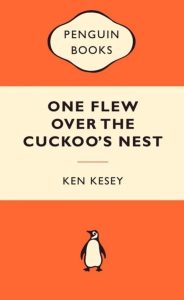
Kesey’s novel drew heavily from his experiences working in a psychiatric hospital, and the play carried that same authenticity onto the stage. Audiences were confronted with the realities of involuntary treatment, electroconvulsive therapy, lobotomies, and the broader mechanisms of institutional control that shaped mid‑century psychiatric care. As the play circulated through the 1960s and 1970s, it became part of a wider cultural reckoning, contributing to growing public scrutiny of mental health institutions and influencing the movement toward de‑institutionalisation in the United States. The play’s influence on public consciousness was undeniable. Its impact endured precisely because it brought these confronting realities into a shared space, asking audiences to witness, question, and reflect.
Across six decades, One Flew Over the Cuckoo’s Nest has become one of the most widely performed psychological dramas in contemporary theatre. It has travelled internationally, earned major awards, and continually evolved through new interpretations.
Now, Melbourne audiences will experience its full force: the humour, the humanity, the tension, and the enduring relevance of a story that continues to provoke reflection and conversation.
This is a chance to engage with a work that has shaped theatrical history and remains as compelling today as it was in 1963.